
Live Facial Recognition
Live Facial Recognition (LFR)
Live Facial Recognition (LFR) compares a live camera feed of faces against a predetermined watchlist in real-time. It is used to locate persons of interest by generating an alert when a possible match is found.
How is Facial Recognition Technology used?
Greater Manchester Police currently utilises NEC’s NeoFace facial recognition technology.
Before using LFR, a watchlist of subjects is created, that are wanted by the police and courts. The watchlist also includes people who may pose a risk of harm to themselves or others.
LFR cameras target an area, and the images are streamed to the live facial recognition technology. The images are compared against the images in the watchlist. When the technology finds a possible match, an alert is generated.
An officer then compares the camera image to the person they see and decides whether to speak to the person.
We will always explain why we have chosen to speak with someone and give them an informational leaflet with contact details if they have further questions. Persons who are not included on a watchlist cannot be identified.
We will delete the images with alerts immediately after using them or within 24 hours. The images and biometric data of those who don’t cause an alert are automatically and immediately deleted. We record the CCTV footage that is used by the LFR technology, and we keep it for 31 days subject to any requirements under CPIA and MOPI.
Greater Manchester Police Privacy Policy explains how we collect, store, use, disclose, retain and destroy personal data.
Where is Live Facial Recognition (LFR) technology used?
A list of future deployments can be viewed here.
Register of deployments can be viewed below under 'Related documents'.
When is Live Facial Recognition (LFR) technology used?
Live Facial Recognition technology is considered an efficient and effective policing tactic to prevent and detect crime and protect the most vulnerable in our society. GMP use LFR in the following circumstances.
Proactive deployments: Deployments will be based on information and intelligence and crime data for those areas, including increases in types of crime and persistence of crime occurring at significant volumes at a given location.
Event deployments: These Deployments are in response to specific events which are expected to attract increased public attendance to an identified location. These Deployments will support policing operations to ensure the safety of the public at the location.
Incidentintelligence specific deployments: These Deployments will be in response to a specific incident or in response to specific intelligence.
An example of this would be Deployment of LFR to a location where disorder has recently occurred and intelligence exists that the disorder may continue between identified individuals who have yet to be located.
Another example would be where we could reasonably expect that a missing person (medium / high risk) may be located withing a Deployment area
How the police inform the public it’s using LFR
Greater Manchester Police will do everything reasonably possible to inform the public where we are using Facial Recognition technology for example:
- Online before it is used
- Greater Manchester Police website where the results are published of when LFR is used
- Information leaflets for the public
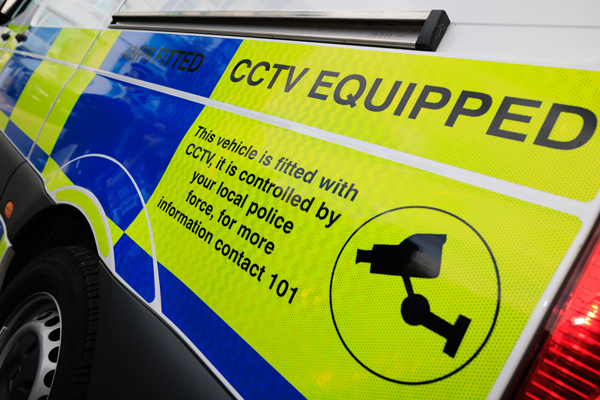
- Posters and signs to include QR codes to make people aware LFR is being used and where they can go to find further information
Police officers are available to explain to the public how LFR works and why we are using it.
Testing of Facial Recognition Technology
The Metropolitan Police Service (the Met) and South Wales Police (SWP) tested Facial Recognition Technology (FRT) with the National Physical Laboratory (NPL). The NPL is a world-leading centre of excellence that provides cutting-edge measurement in science, engineering and technology.
Thanks to previous testing by the National Institute of Standards and Technology (NIST) the Met and SWP knew that their FRT used a high performing algorithm. The aim of the testing was to develop an in-depth understanding of the performance of the algorithms when it was being used in an operational environment. The three policing use cases were:
- Live Facial Recognition (LFR)
- Retrospective Facial Recognition (RFR)
- Operator Initiated Facial Recognition (OIFR)
The NPL test plan was specifically designed to help identify any impact this technology may have on any protected characteristics, in particular race, age and sex.
What the test results tell us about the algorithm
The NPL report gives us an impartial, scientifically underpinned and evidence-based analysis of the performance of the facial recognition algorithm used by the Met and SWP. The same algorithm is also used by GMP.
The report concluded that there are settings that our algorithm can be operated at where there is no statistical significance between demographic performances.
The results from the tests helped the Met and SWP with further understanding of how to use FRT fairly in order to prevent and detect crime, safeguard national security and keep people safe and in turn have informed GMP on the use of the FRT.
Related documents